

Wild garlic (also known as ramsons) is one of the first signs that spring has properly arrived in the UK. From March to May, woodland floors across the country come alive with bright green leaves and the unmistakable smell of garlic hanging in the air.
This edible plant is a favourite among foragers thanks to how easy it is to find and how versatile it is in the kitchen. Once you’ve spotted a patch – usually through its trademark garlicky smell – it doesn’t take long to gather a handful of leaves that can be turned into everything from wild garlic pesto and pasta to butter, soups, and sauces.
In this guide, you’ll learn what wild garlic is, how to identify it safely, where to find it in the UK, and how to prepare and cook with it – along with a few simple vegan recipes to help you make the most of the season!
I create new content every single week. Subscribe to keep in touch and get a free download of The Vegan Kitchen – My Top 10 Tips.
Jump to:
- What is it? 🌱
- Why I love it 💚
- Other names 📝
- Taste 😋
- Where to find 👀
- Identification 🔎
- Preparation 🔪
- Use in cooking 🧑🍳
- Foraging tips 🤓
- Seasonality 🗓️
- FAQ ❓
What is wild garlic?
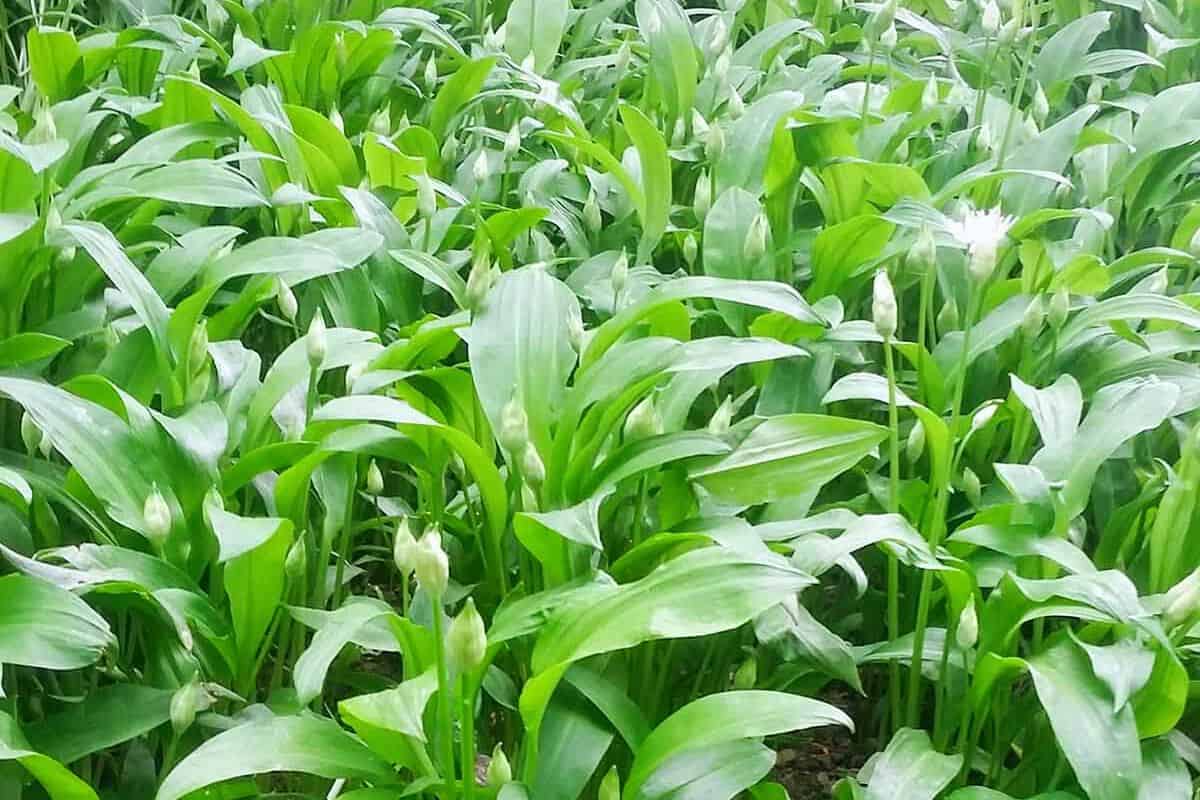
Wild garlic (Allium ursinum) is a leafy green plant that grows wild across the UK and much of Europe. It appears in early spring and is commonly found carpeting damp woodland floors, often filling the air with a distinctive garlic aroma.
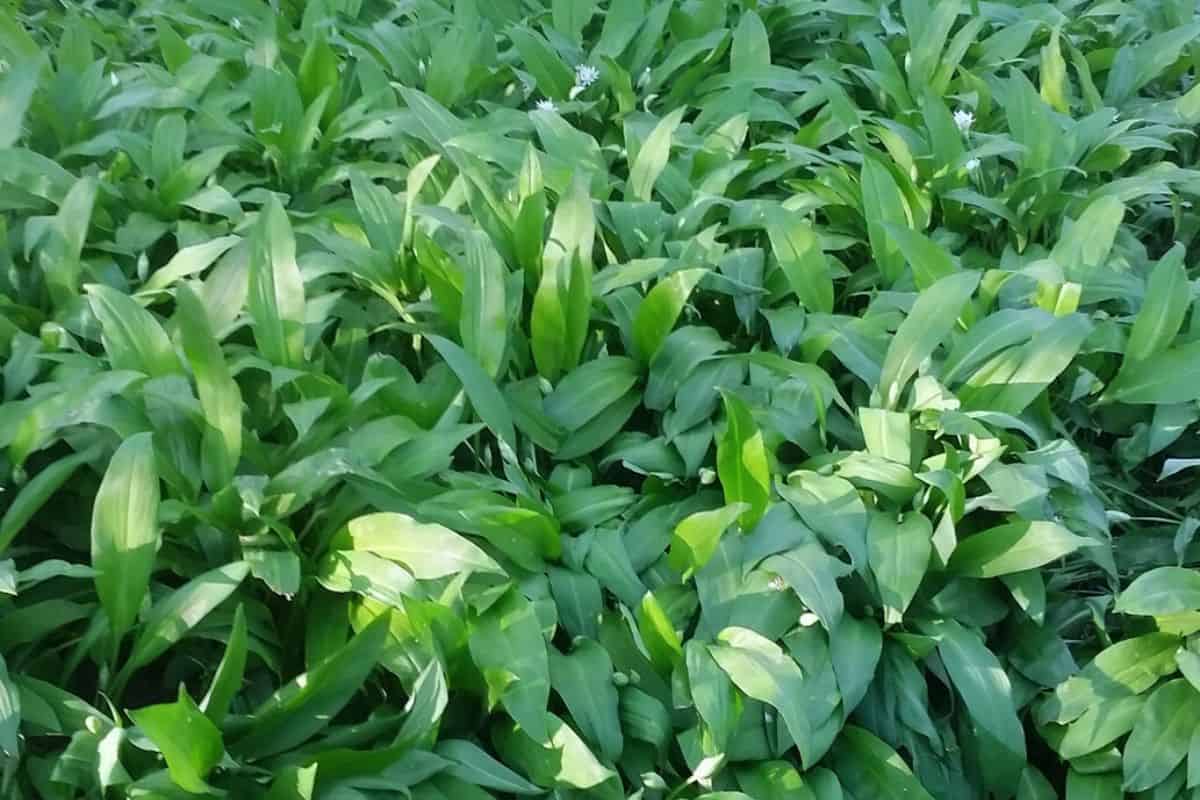
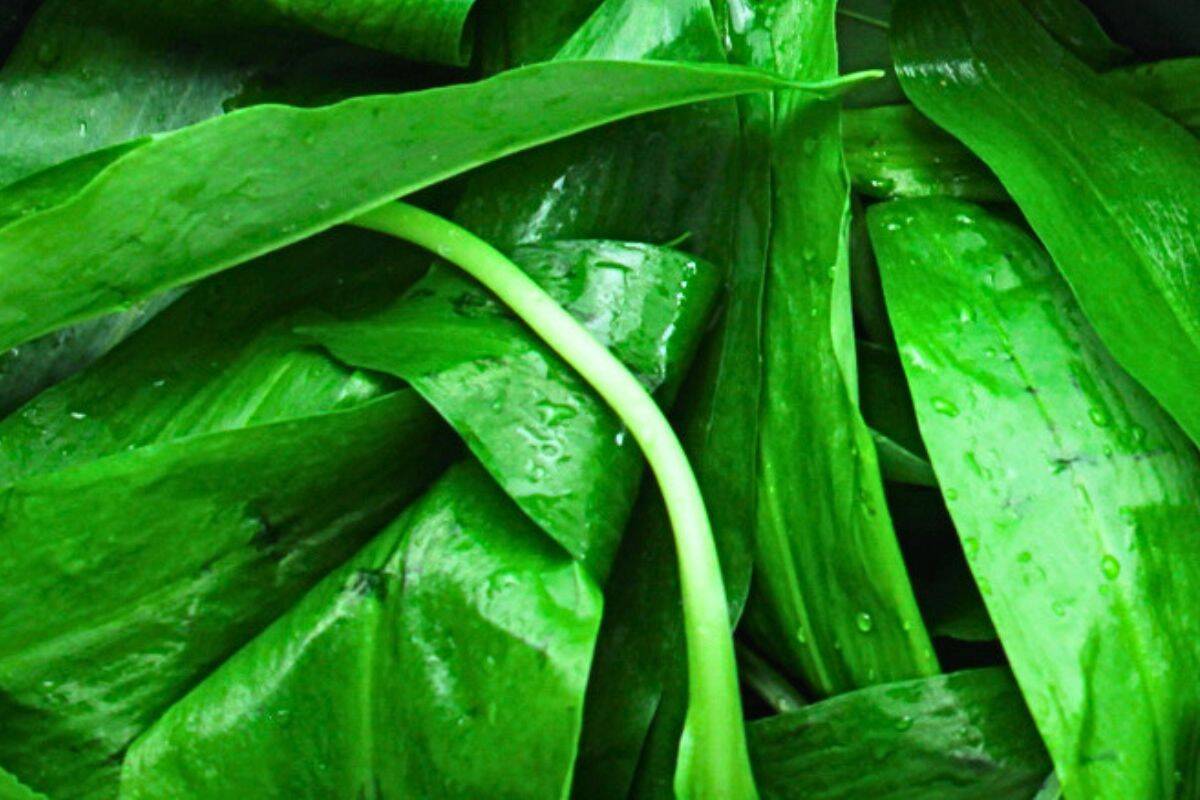
Unlike cultivated garlic, the leaves are the main edible part of the plant. They’re broad, soft, and bright green, with a fresh garlic scent that becomes obvious as soon as you crush them between your fingers.
Wild garlic typically grows between March and May in the UK, making it one of the first seasonal ingredients available after winter. During this time, foragers head out to gather the leaves for cooking in dishes such as pesto, soups, pasta sauces, and breads.
If you’re lucky enough to live near woodland areas, you might even find it growing locally. In spring, large patches of wild garlic are easy to spot (and even easier to smell).
Can you eat wild garlic?
Yes, wild garlic is completely edible and has been used in cooking across Europe for centuries. The leaves are the most commonly used part of the plant and have a mild garlic flavour that works well in everything from pesto and soups to pasta dishes.
The flowers and stems are also edible and can be used as a garnish or added to salads for a subtle garlicky flavour.
As with any wild food, you should only eat wild garlic if you are 100% certain of its identification, as some poisonous plants can grow in similar woodland habitats (see below).
Why I love it
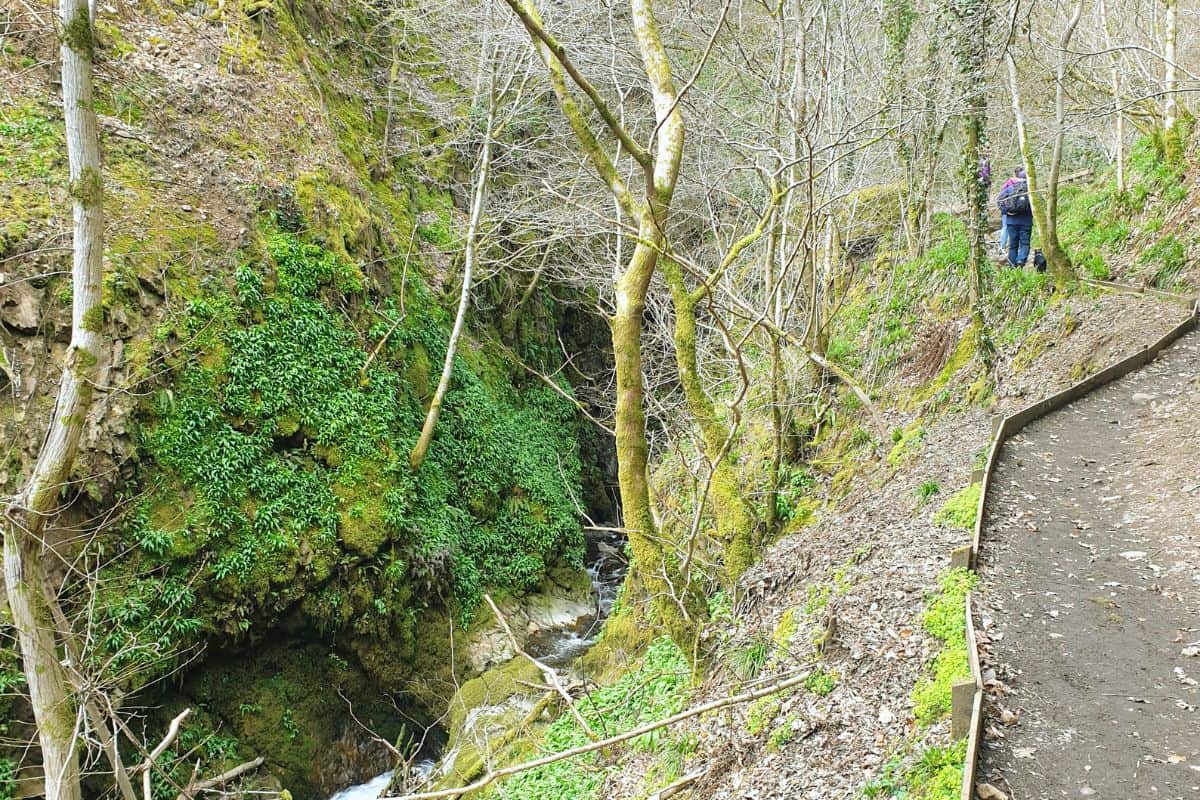
When my ex and I first got into foraging a few years ago, we quickly realised how easy it was to find wild garlic in the woodlands near our home in Sheffield. In spring the forest floor is carpeted with it, and the smell of garlic fills the air as you walk through.
I love the idea of heading out for a walk and coming back with something you can use straight away in the kitchen. In the case of wild garlic, it's incredibly versatile – you can turn it into pesto, soup, pasta sauces, or even mix it into bread and butter (scroll down for recipe ideas).
Is wild garlic the same as ramsons?
Yes, wild garlic and ramsons are exactly the same plant.
“Wild garlic” is the most common modern name in the UK, while “ramsons” is the traditional or regional name for Allium ursinum. You’ll often see the two terms used interchangeably in recipes, foraging guides, and cookbooks.
The name ramsons comes from an old English word believed to be linked to wild garlic’s strong smell and its long history as a wild food. In some parts of the UK, people may also refer to it as:
- Buckrams
- Wood garlic
- Bear’s garlic (this is where we get the botanical name Allium ursinum)
What does wild garlic taste like?
Wild garlic has a fresh, mild garlic flavour that’s softer and more delicate than regular garlic cloves.
The leaves taste slightly garlicky with subtle green, herb-like notes, which makes them incredibly versatile in cooking. They add flavour without the sharp bite that raw garlic can sometimes have.
Because the flavour is fairly gentle, wild garlic works well in a wide range of dishes. It can be:
- Blended into wild garlic pesto 🫙
- Stirred through pasta or risotto 🍝
- Added to soups 🍲
- Mixed into butter or bread dough 🍞
Cooking also softens the flavour slightly, making it even more mellow.
Many people describe wild garlic as tasting like a cross between garlic and spring herbs, which is why it pairs so well with simple ingredients such as pasta, potatoes, and olive oil.
Where to find wild garlic in the UK
Wild garlic grows abundantly across much of the UK and is one of the easiest wild foods to spot once you know what you’re looking for. It typically appears in early spring, from March to May, when woodland floors start to come alive after winter.
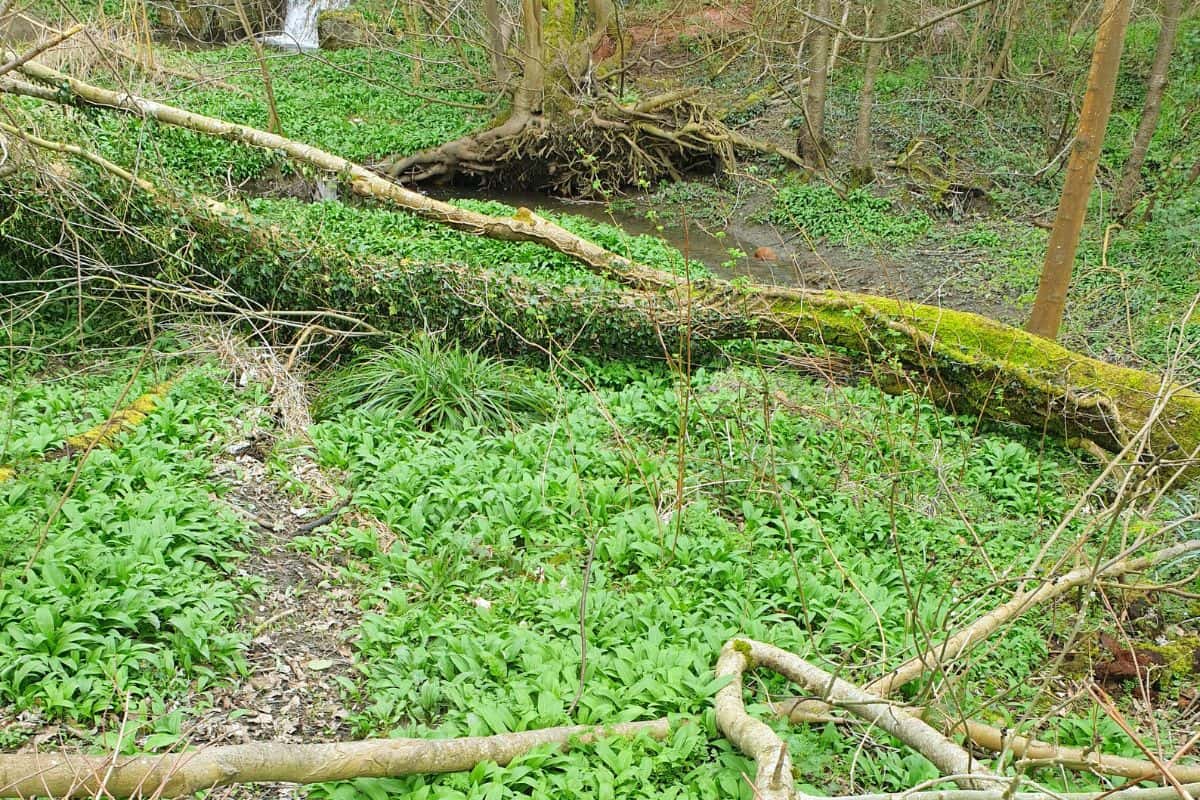
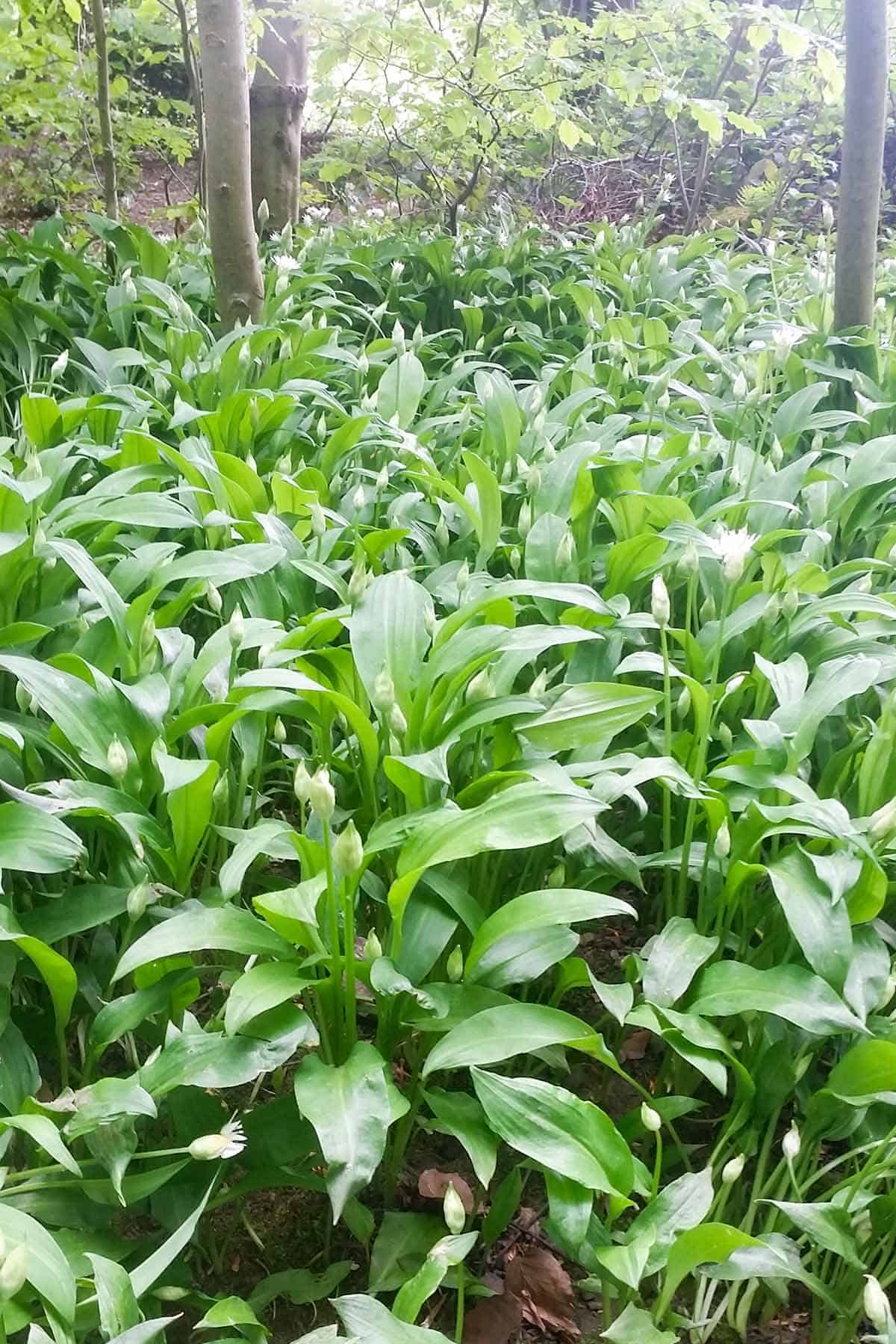
You’ll usually find wild garlic growing in damp, shady woodland, in large, dense patches, often covering entire woodland floors in spring. It usually pops up near streams, rivers, or other areas where the soil stays moist.
In the right conditions it spreads quickly, forming huge carpets of bright green leaves that can cover large areas of the forest floor. 👇
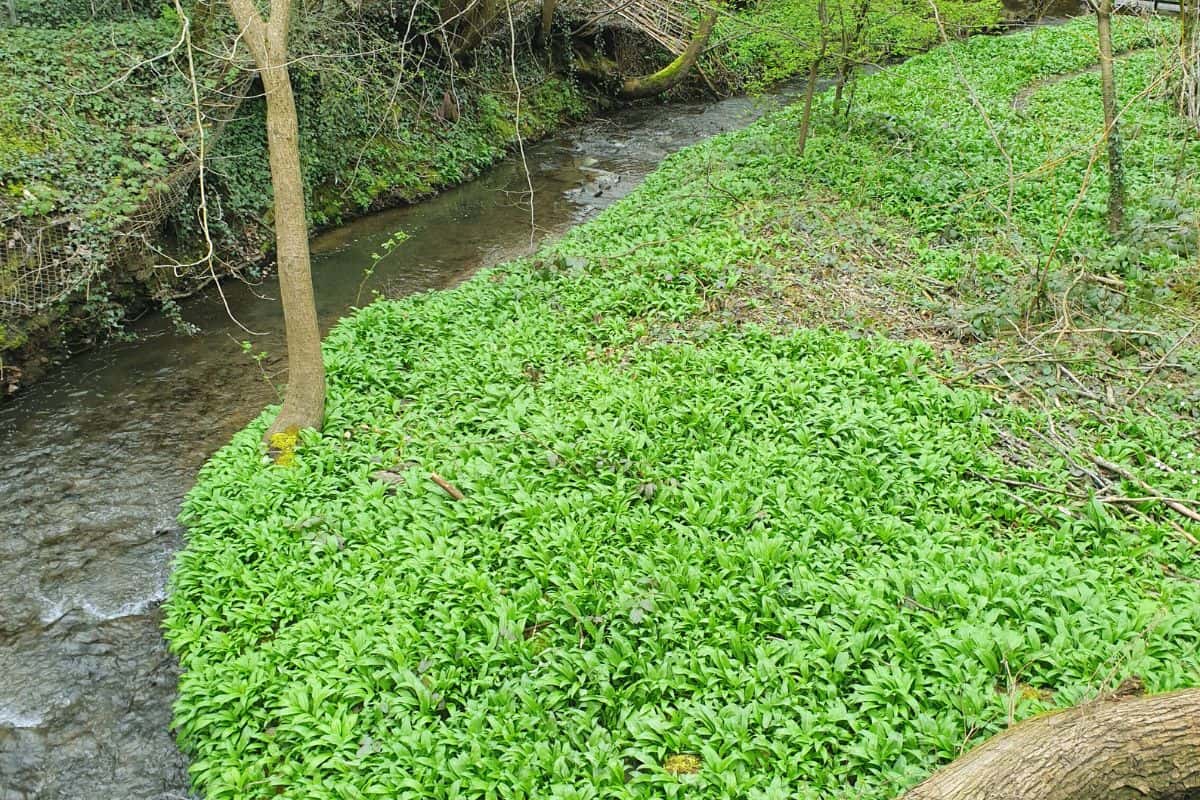
One of the easiest ways to locate it is actually by smell. As you walk through woodland during wild garlic season, you may suddenly notice a strong garlic aroma in the air, which is often a good sign that ramsons are growing nearby.
When I first started getting into foraging a few years ago, I quickly realised just how common wild garlic is in the woodlands around Sheffield. In some places the ground is completely covered with it, making it easy to pick a handful of leaves to take home for cooking.
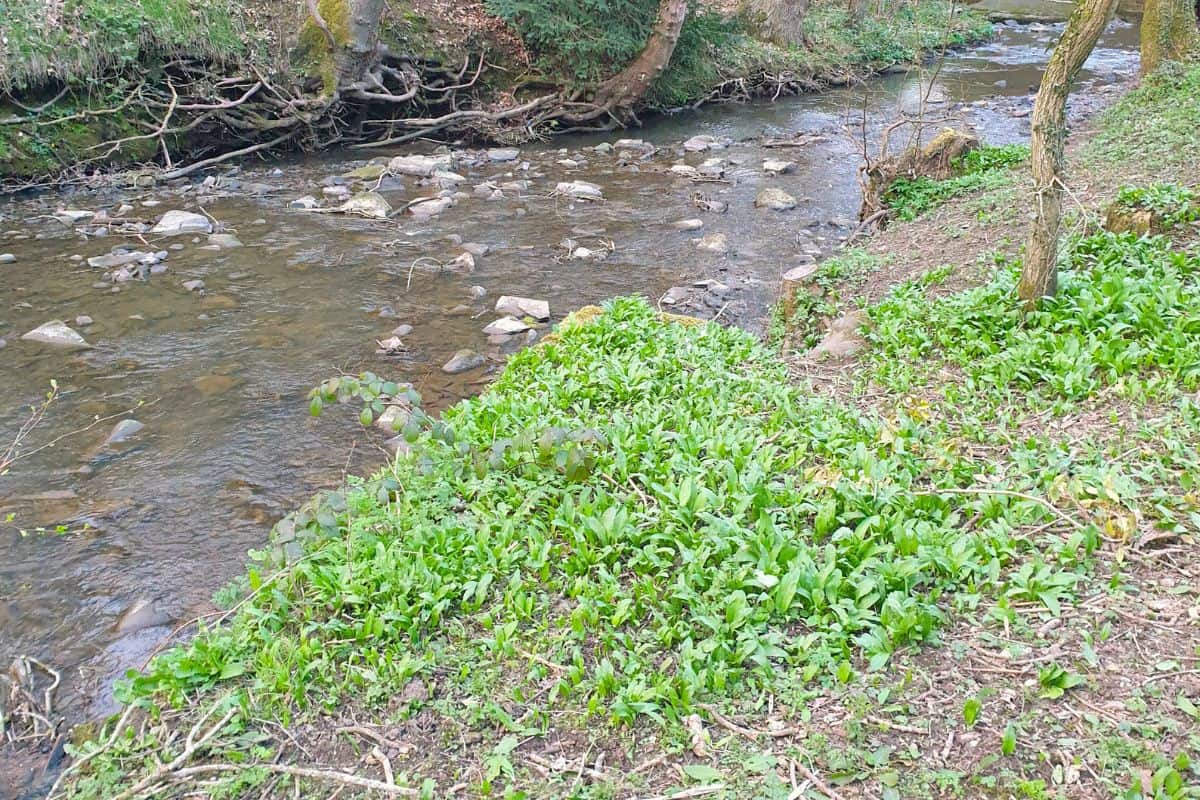
If you’re gathering wild garlic yourself, it’s best to pick small amounts from different patches rather than stripping one area, leaving plenty behind so the plants can continue to thrive.
Once you start noticing it, you’ll probably begin spotting wild garlic everywhere each spring – and it’s a great way to turn a woodland walk into an ingredient hunt for your next meal. 🌿
How to identify wild garlic safely
Wild garlic (Allium ursinum) is considered one of the easier wild plants to identify. However, as with any wild food, it’s important to be completely certain before picking or eating it, as there are a few poisonous plants that can look similar at first glance.
The good news is that wild garlic has several distinctive features that make it relatively straightforward to recognise once you know what to look for.
The garlic smell test
The easiest way to confirm wild garlic is by smell.
Crush a leaf gently between your fingers and it should release a strong, unmistakable garlic scent. If there’s no garlic smell, it’s very likely not wild garlic.
Foragers often rely on this simple test, but it’s still important to check the plant’s appearance as well.
Leaf shape and growth
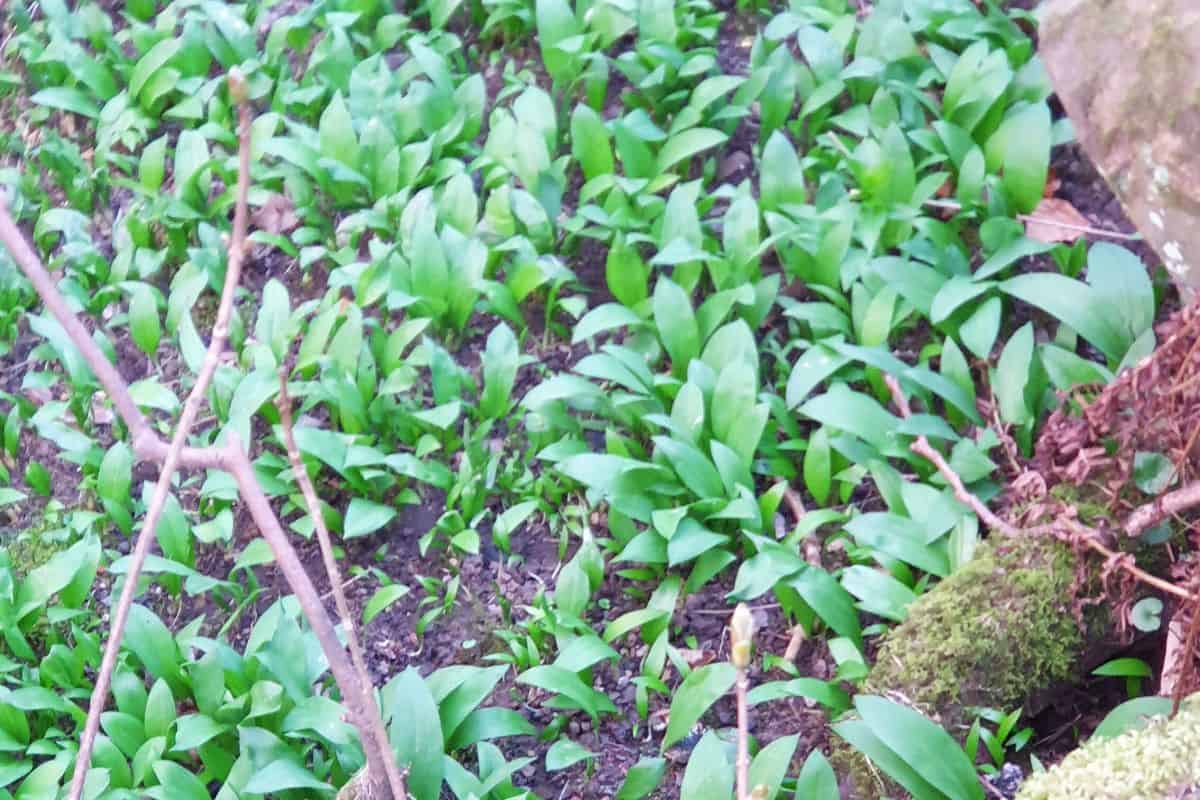
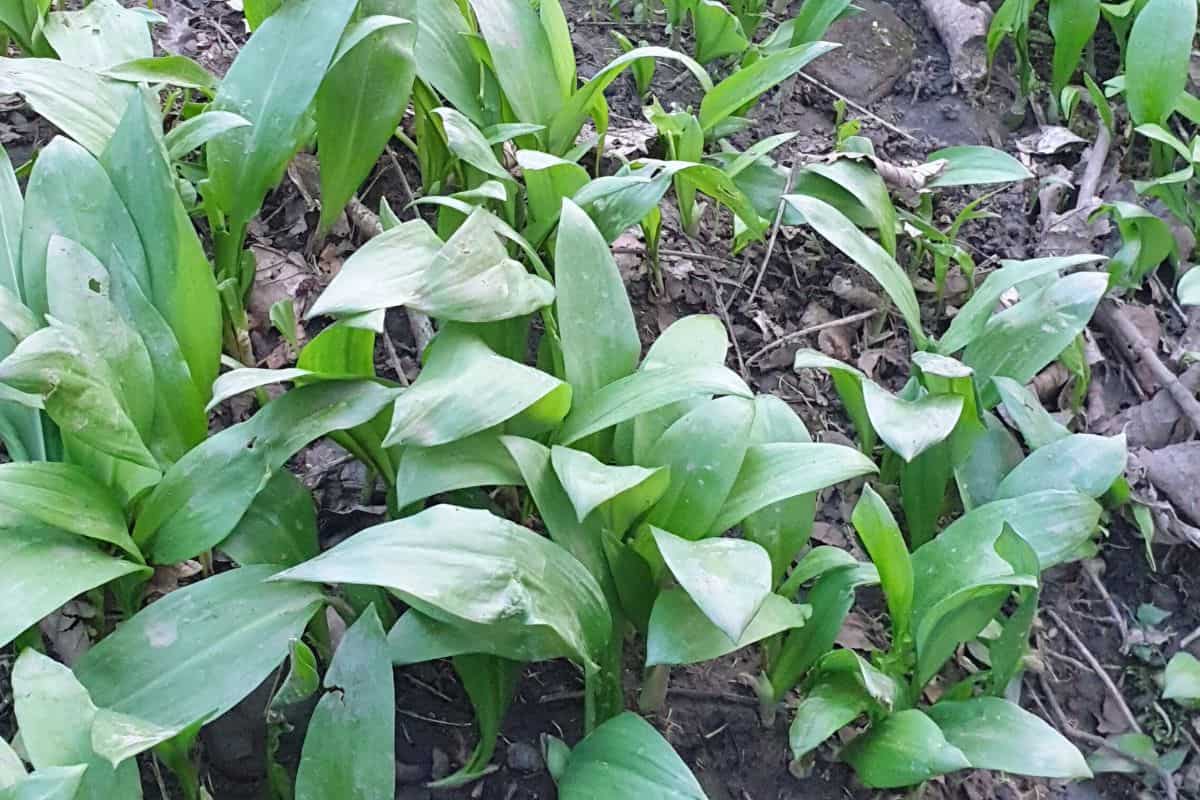
Wild garlic leaves are:
- Broad and soft
- Bright green
- Lance-shaped with pointed tips
- Growing individually from the base of the plant
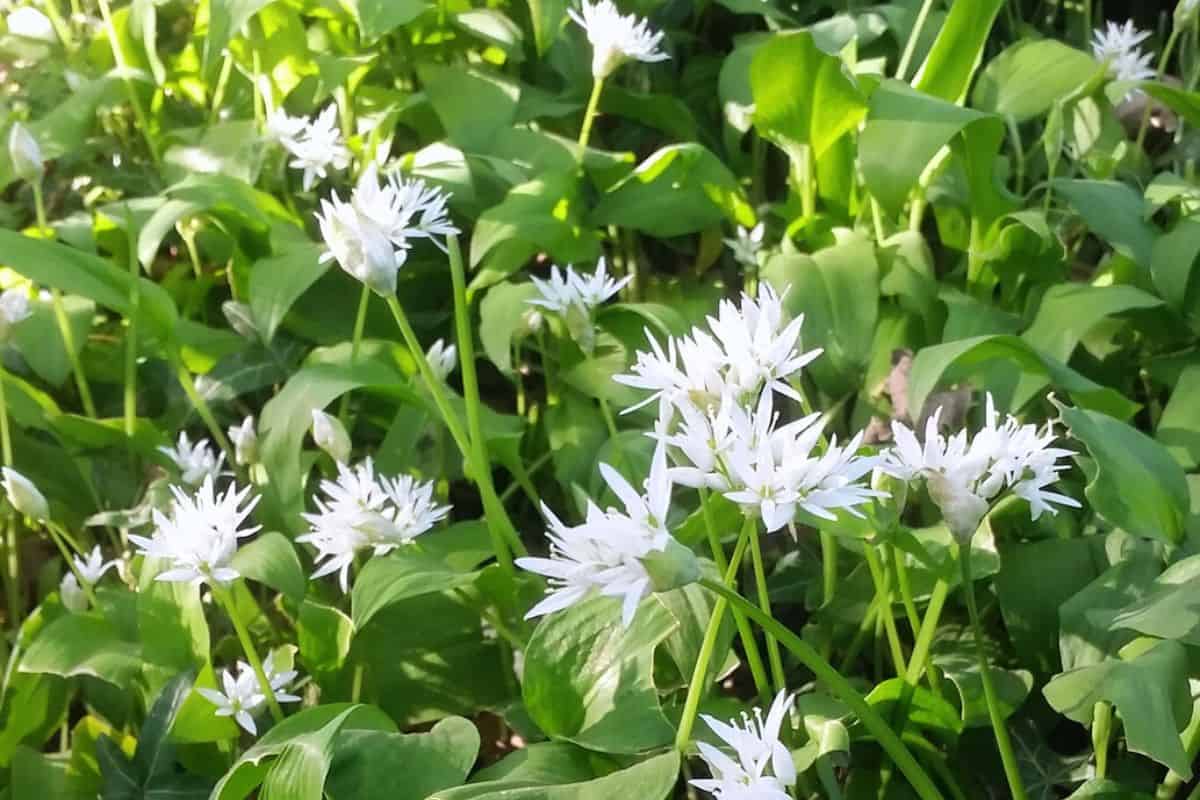
Later in the season, the plant also produces clusters of small white star-shaped flowers, which are another good identifying feature.
Wild garlic tends to grow in large patches or carpets across woodland floors, particularly in damp, shady areas.
Lookalike plants to avoid
Some poisonous plants can grow in similar habitats and may be mistaken for wild garlic by inexperienced foragers.
The most commonly mentioned lookalike in the UK is lily of the valley, which has similar-looking leaves but is highly toxic. Unlike wild garlic, lily of the valley leaves do not smell of garlic when crushed.
Because of this risk, it’s important to never rely on just one identifying feature when foraging. If you’re unsure about a plant, the safest option is simply to leave it alone.
Safe and responsible foraging
Never eat wild food unless you are 100% certain of its identification. If you’re new to foraging, it’s a good idea to learn from knowledgeable experts, attend courses, and refer to multiple trusted resources such as books and reputable websites.
Always forage in public areas or make sure you have the landowner’s permission if you’re on private land. When picking wild garlic, take only what you need for personal use and avoid damaging the plant.
You should never dig up the bulbs or uproot entire plants. In the UK, removing a plant by its roots without permission is unlawful under the Wildlife and Countryside Act 1981.
For more guidance on responsible foraging, see the Foraging Code from Wild Food UK.
How to prepare wild garlic
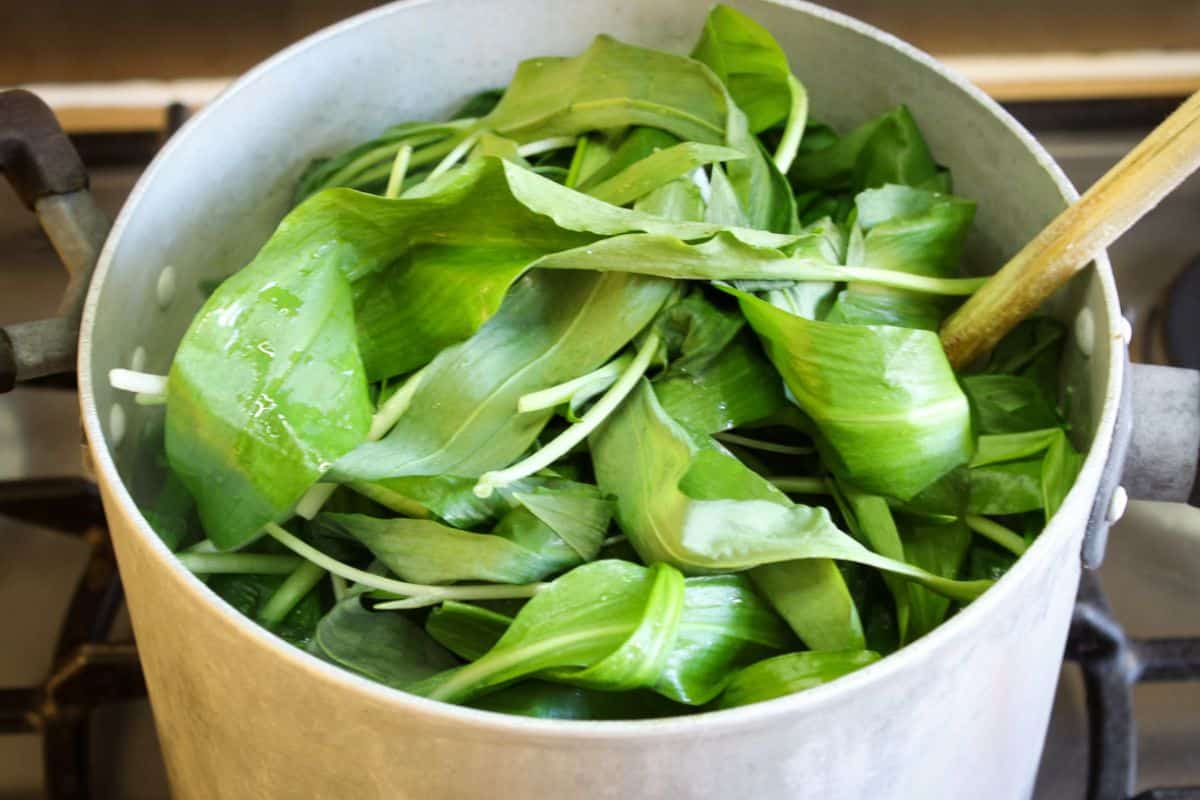
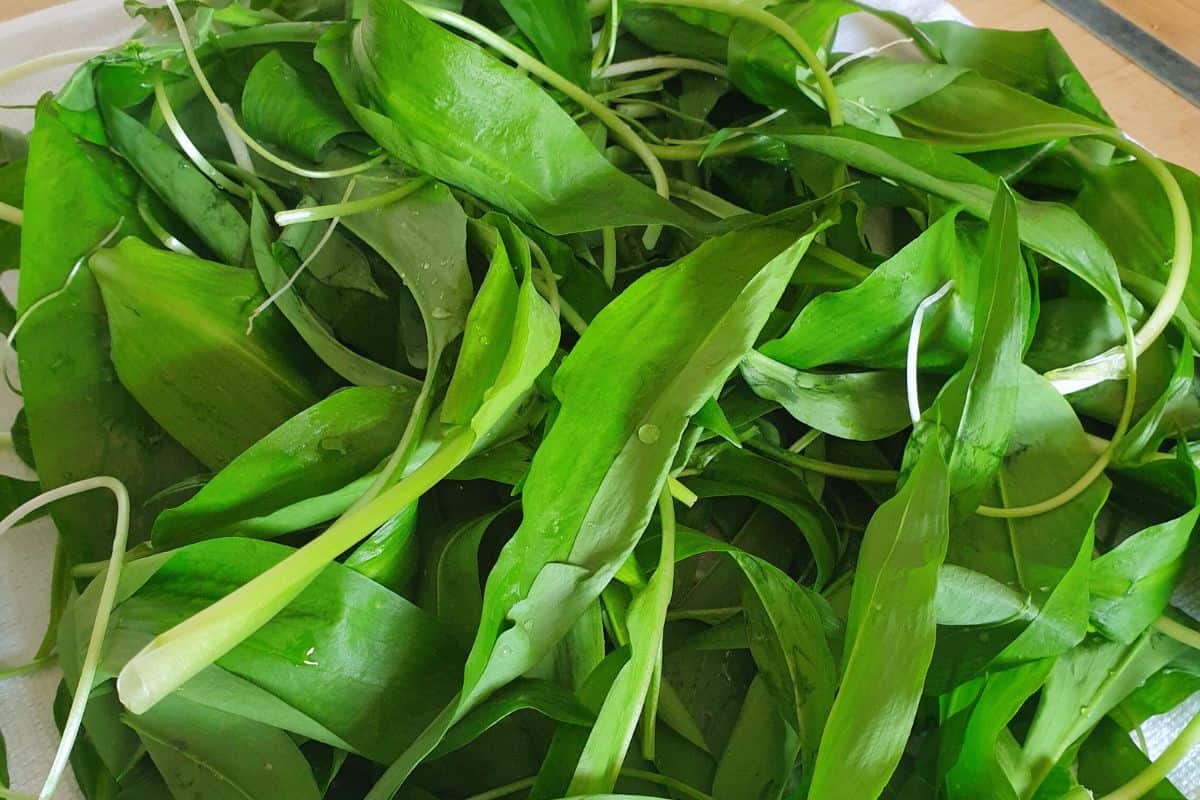
Once you’ve picked or bought some wild garlic, preparing it for cooking is quick and simple. Like most leafy greens, the main thing is to clean it well before using it.
Start by giving the leaves a good rinse in cold water to remove any dirt, grit, or small insects. If you’ve foraged the leaves yourself, you may find a bit of woodland debris clinging to them, so it’s worth swishing them around in a bowl or sink of water rather than just running them under the tap.
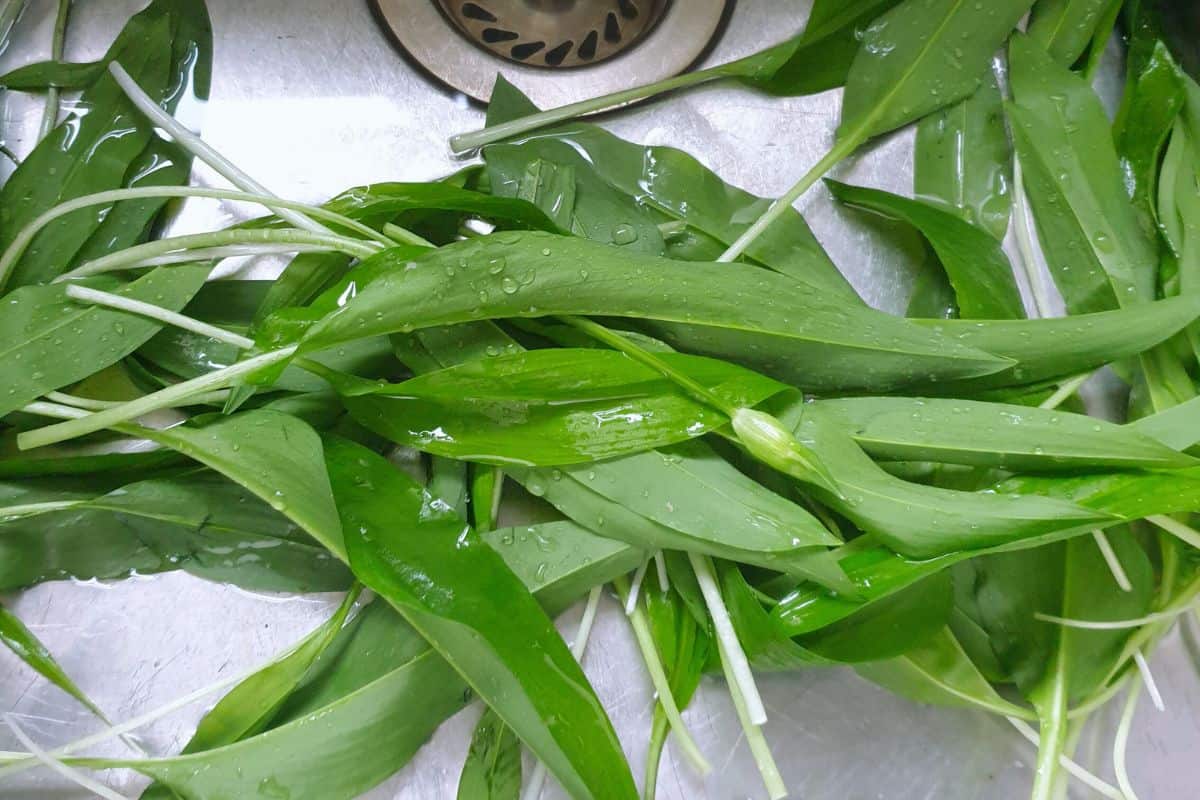
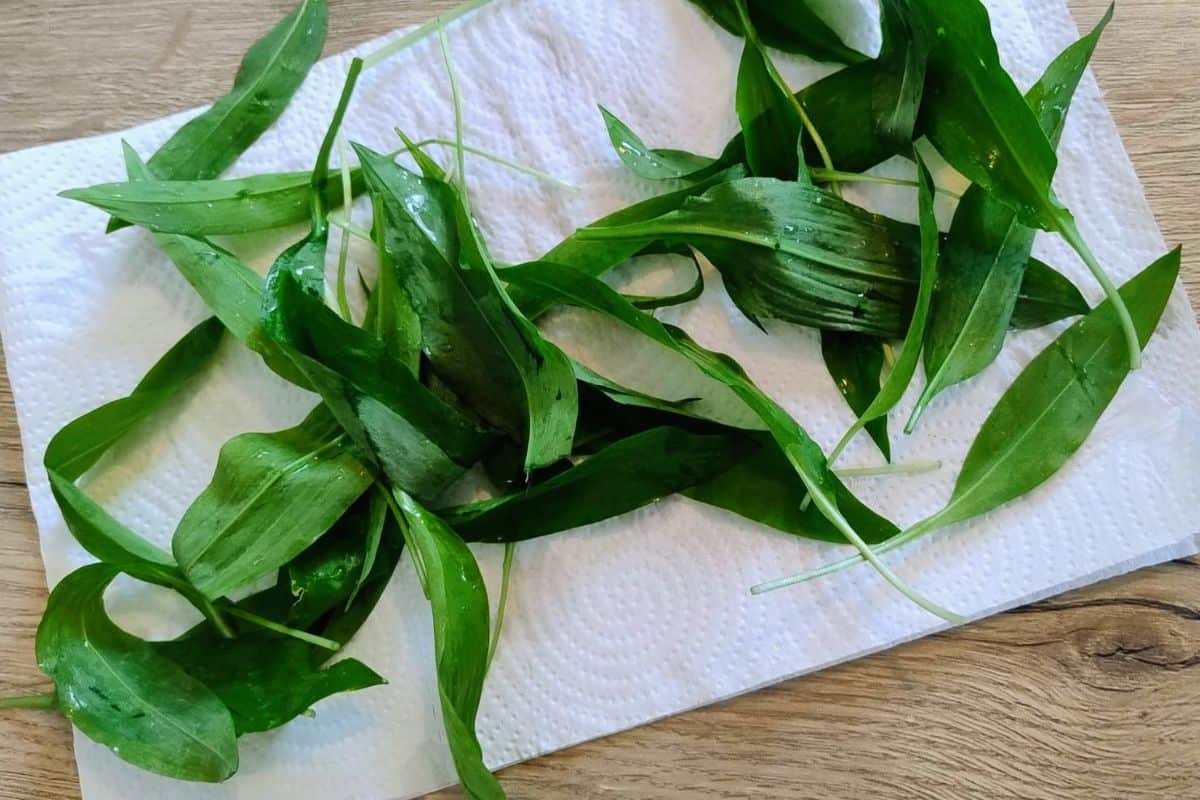
Next, transfer the leaves to a colander to drain, then lay them out on a clean tea towel or some kitchen paper and gently pat them dry. You don’t need them perfectly dry, but removing excess water helps when chopping or blending them into things like pesto.
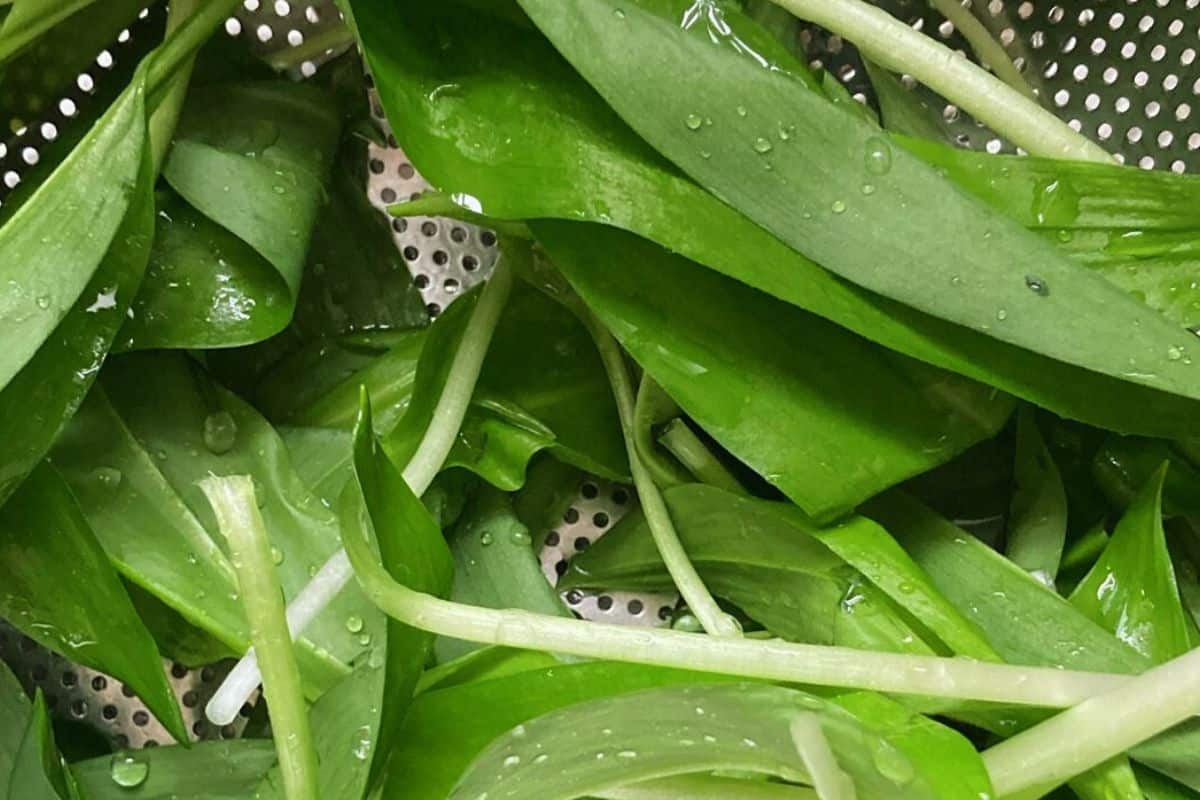
Once cleaned, the leaves can be roughly chopped, sliced, or blended, depending on the recipe you’re making. From there, they’re ready to use in everything from soups and pasta dishes to sauces and spreads.
Store fresh wild garlic in the fridge, ideally wrapped loosely in a damp paper towel and placed in a container or bag, where it should keep for a few days to up to a week.
How to use wild garlic in cooking
Wild garlic is incredibly versatile and can be used anywhere you’d normally add herbs or garlic. The leaves can be chopped, blended, or wilted into dishes, adding a mild garlicky flavour without overpowering other ingredients.
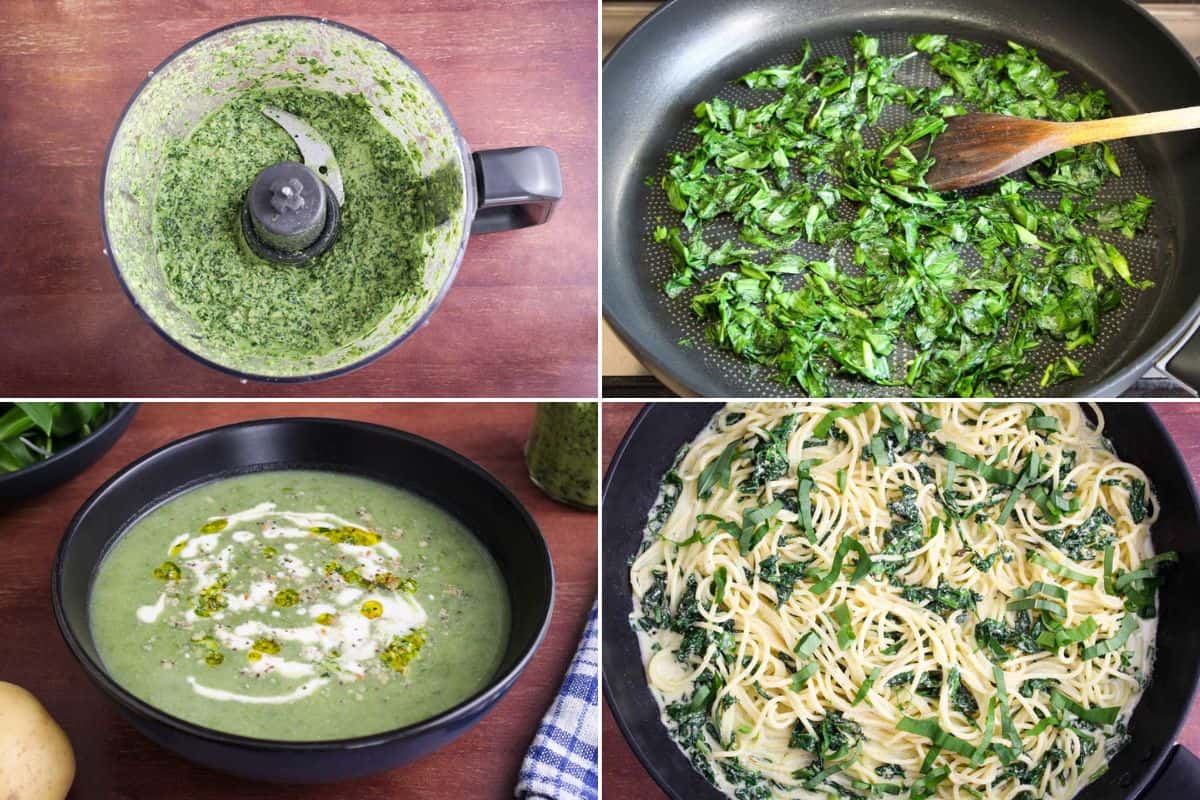
Some of the most popular ways to cook with wild garlic include pesto, soups, and simple pasta dishes. Here are a few vegan recipes you can try:
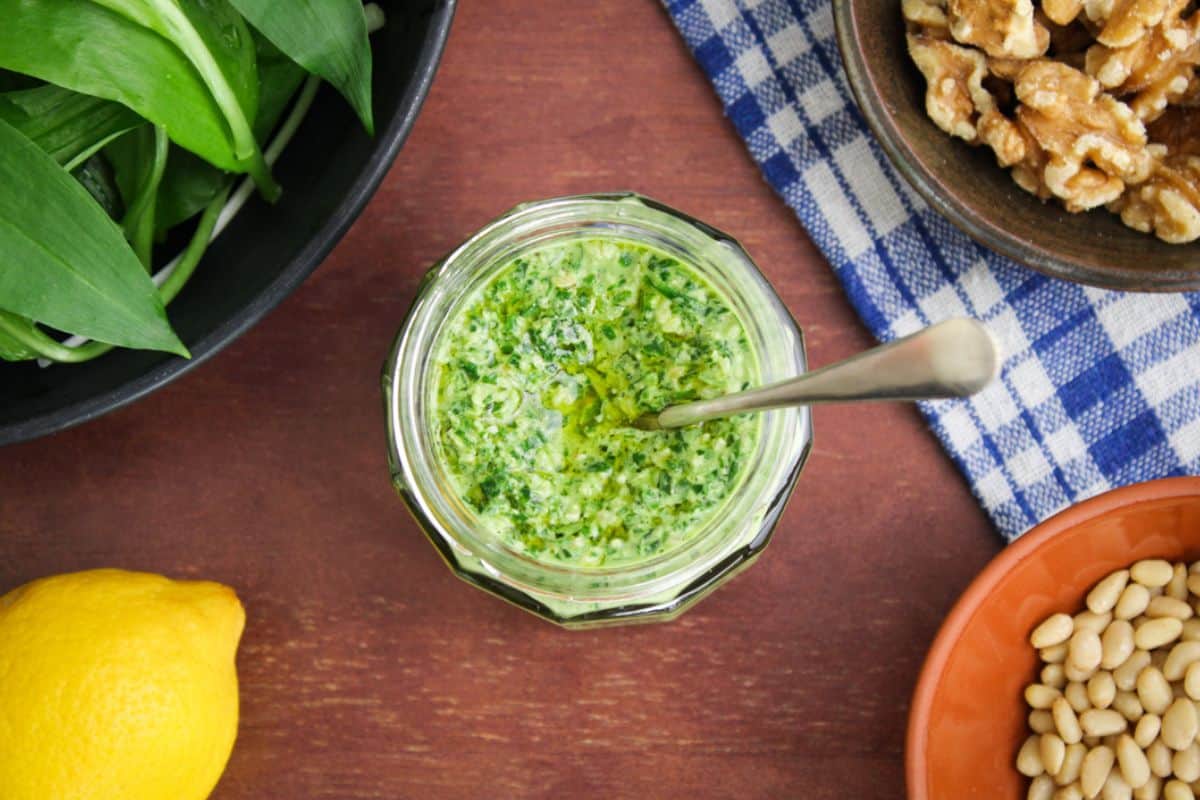
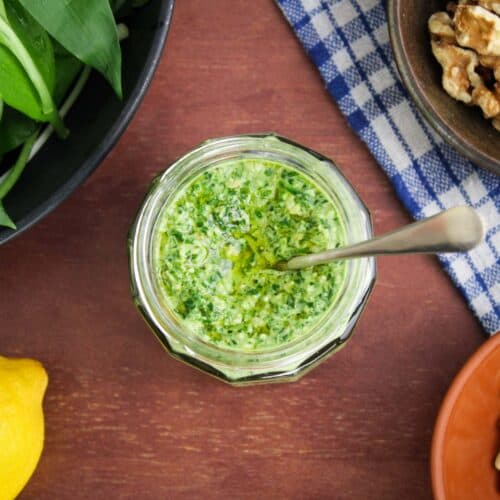
Wild garlic pesto
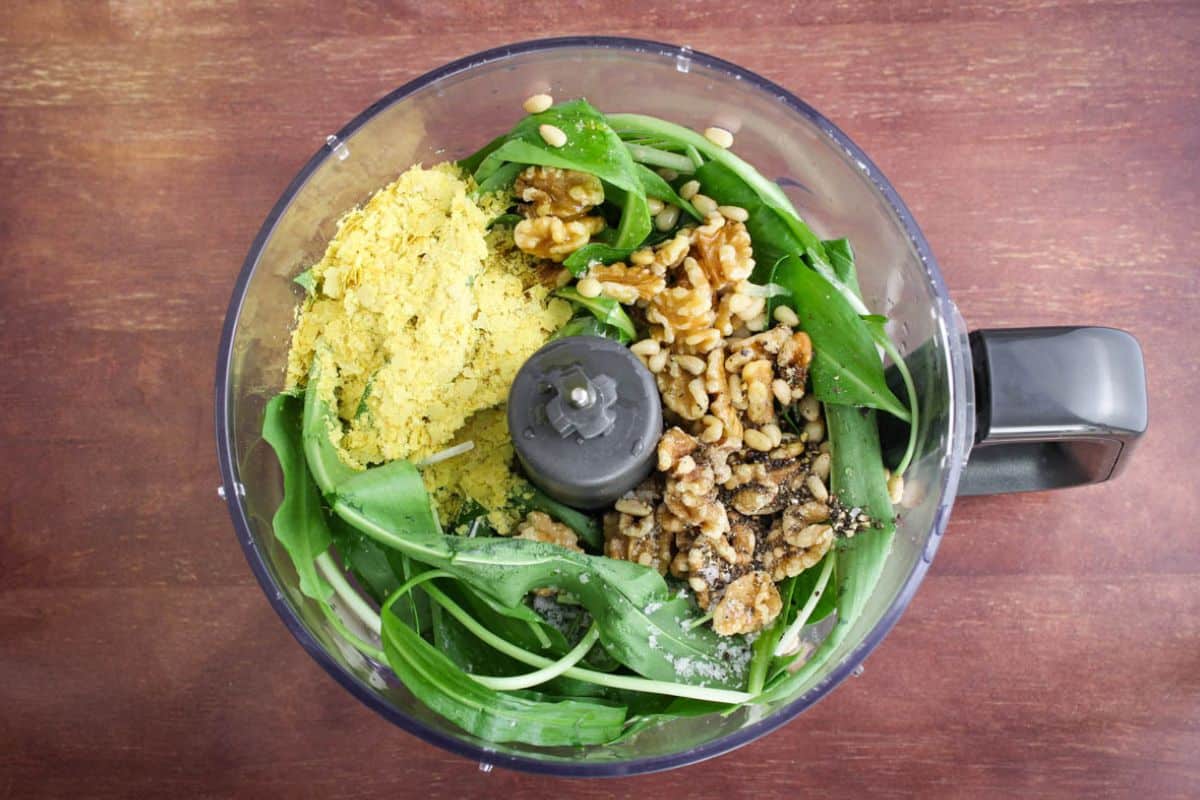
Wild garlic pesto might just be even better than the classic basil version. This vegan recipe swaps cheese for walnuts and nutritional yeast, creating a rich, dairy-free sauce that really lets those fresh foraged leaves shine.
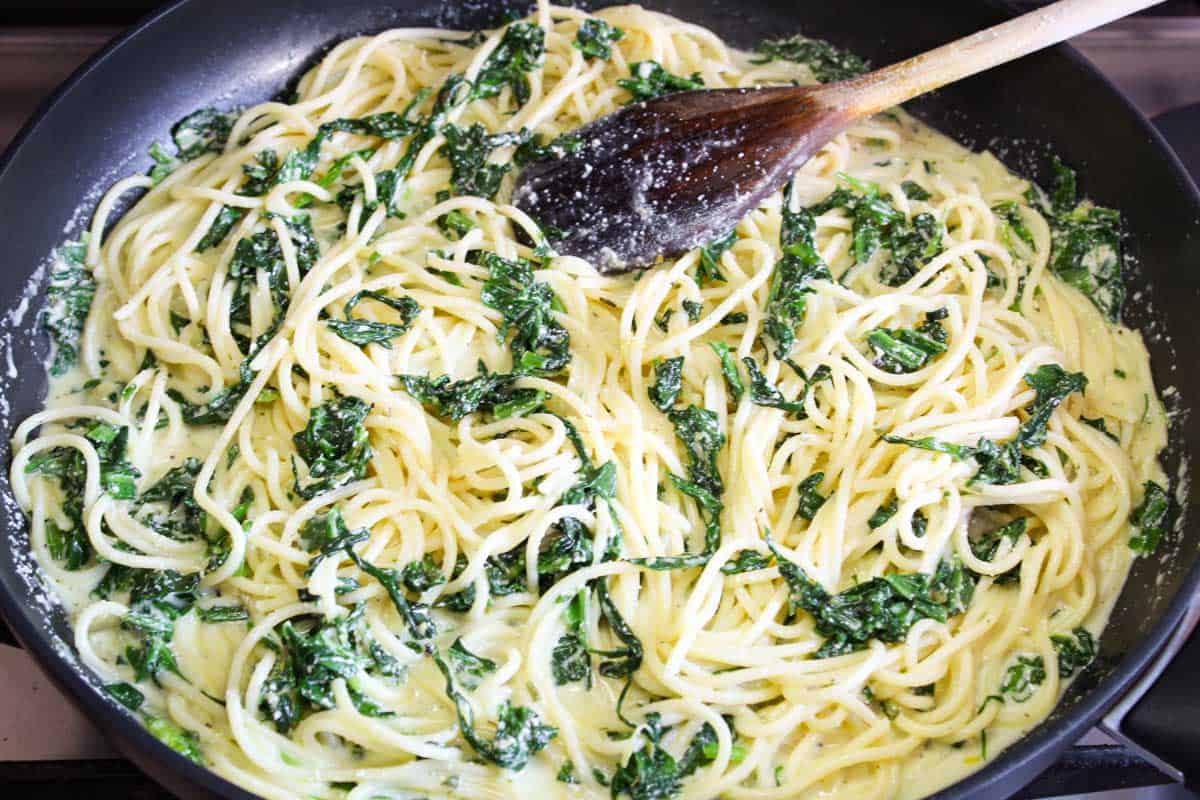
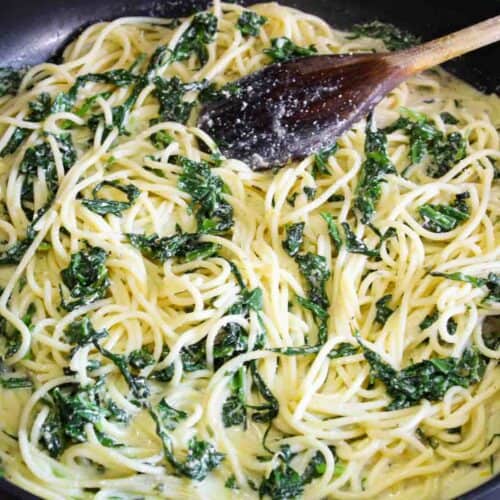
Wild garlic pasta
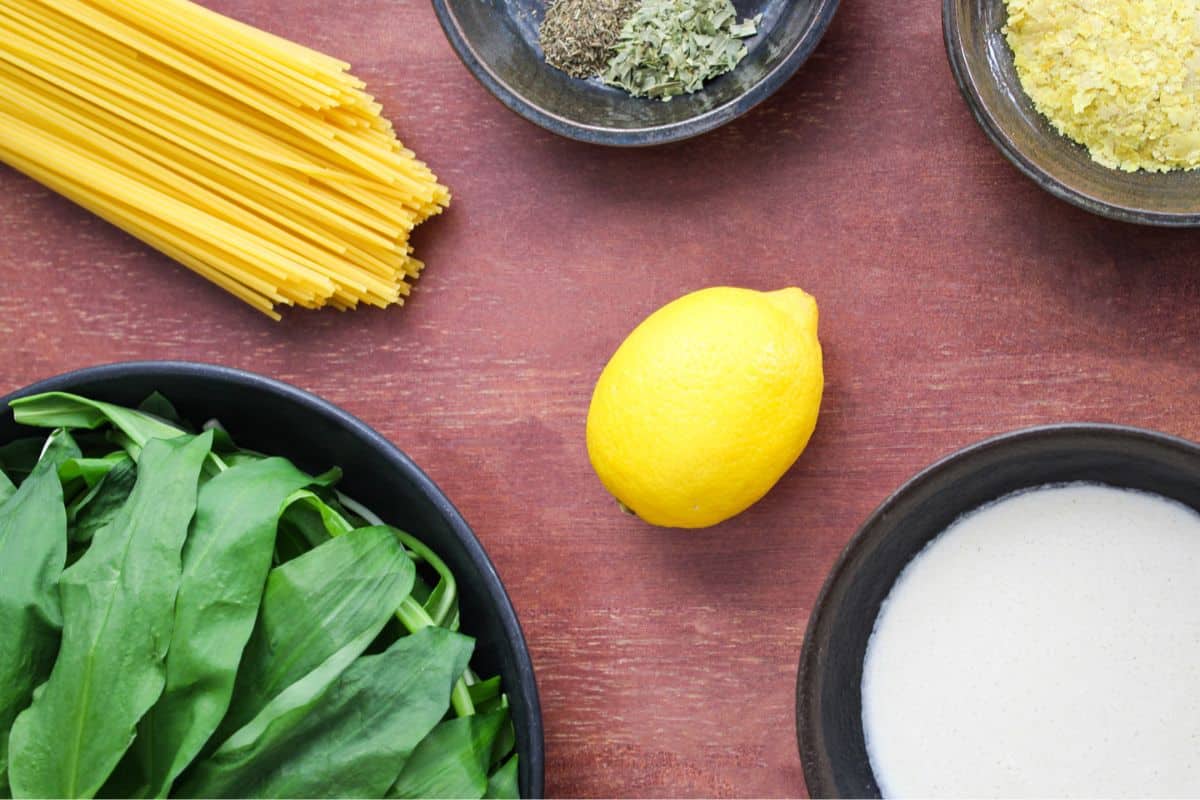
This easy wild garlic pasta combines fresh ramsons with a creamy cashew-based sauce for a simple, flavour-packed meal that’s ready in around 20 minutes. For even more wild garlic goodness, stir through a few spoonfuls of that homemade wild garlic pesto.
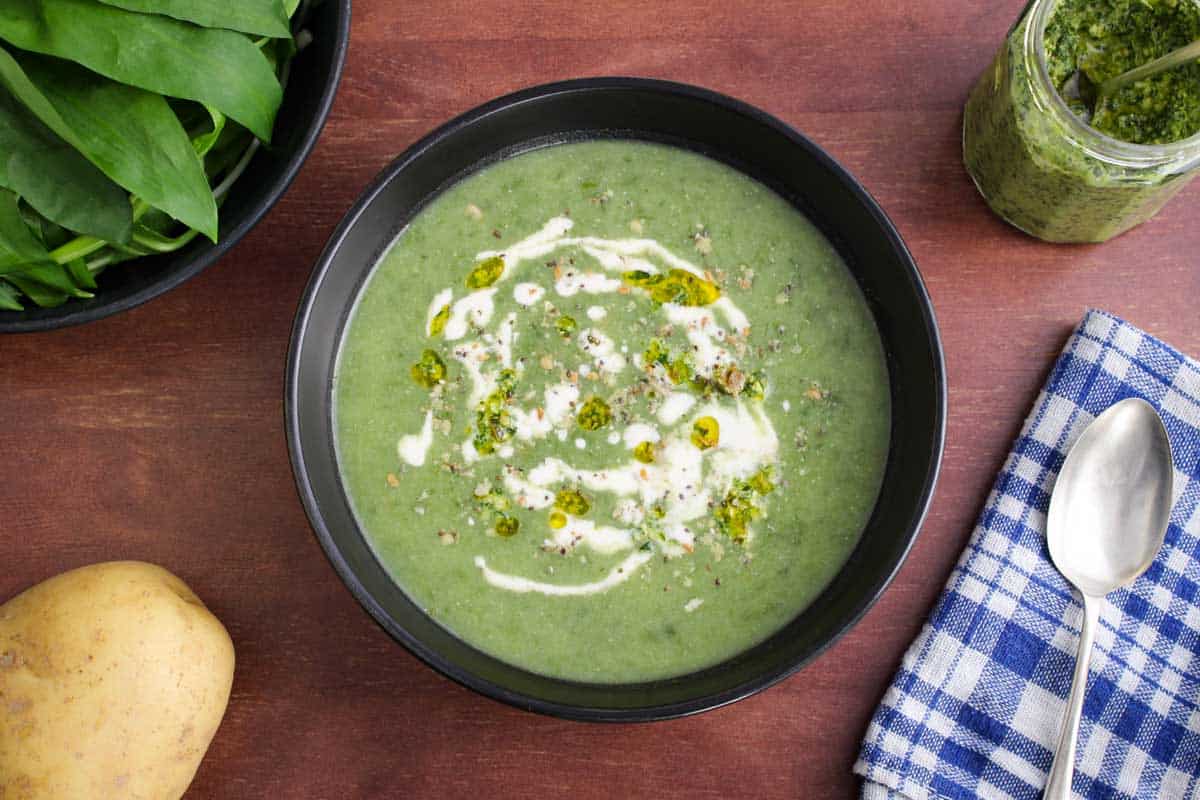
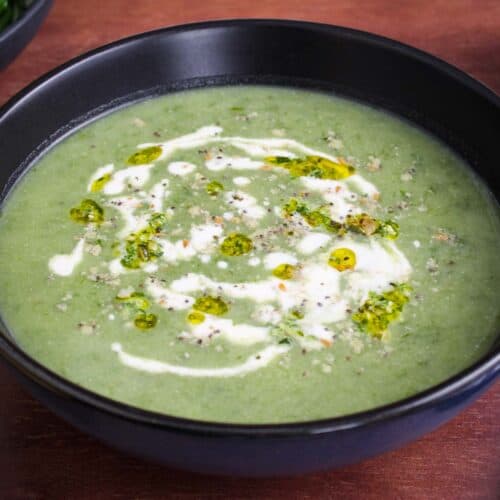
Wild garlic soup
Wild garlic soup is a classic way to make the most of the vibrant green leaves that appear each spring. In this simple recipe, potatoes add body to the broth, which is blended until smooth and finished with toppings such as cashew cream, wild garlic pesto, and super seed mix. 🌱
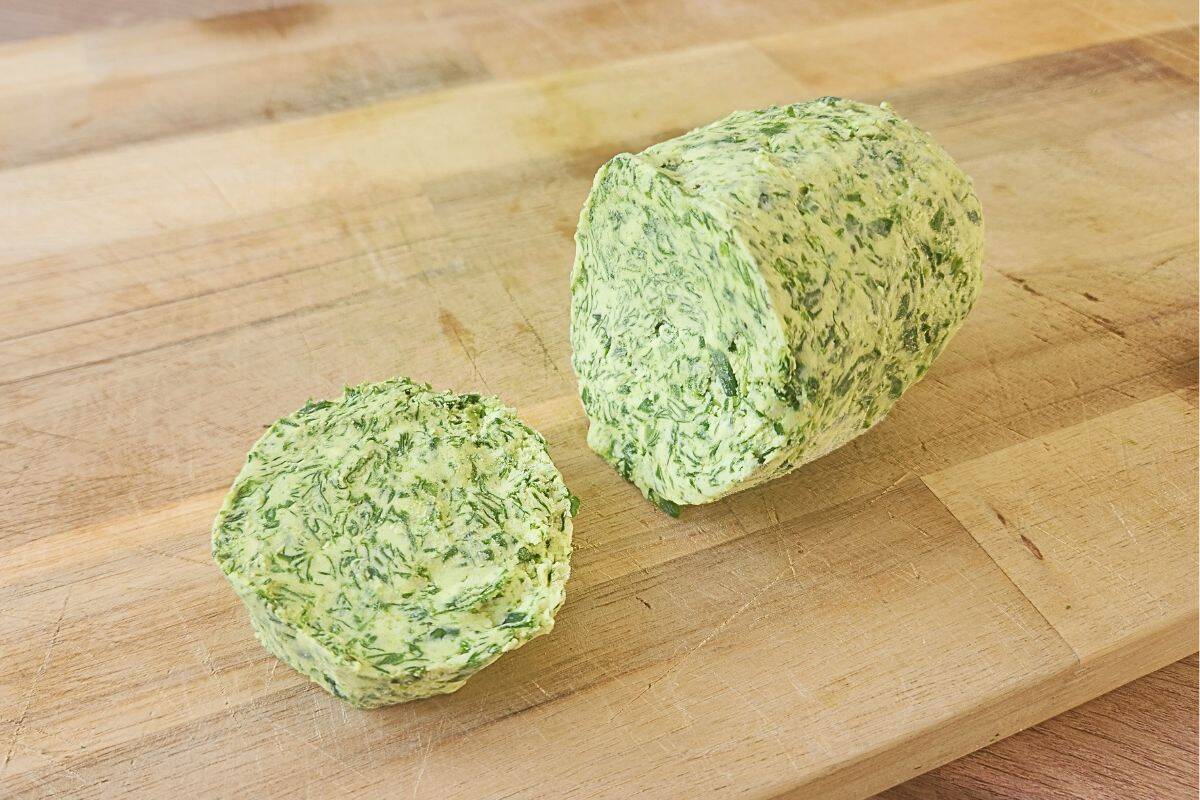
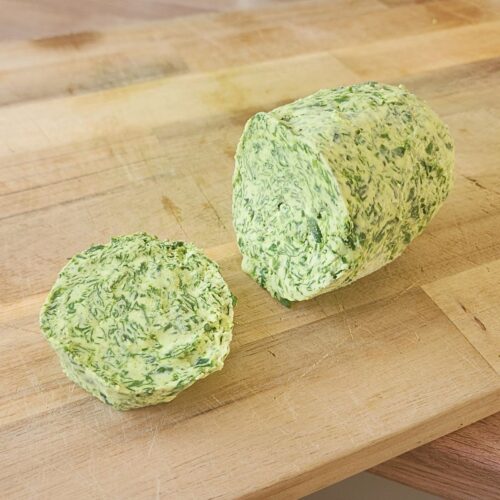
Wild garlic butter
Wild garlic butter is one of the easiest – not to mention most delicious – ways to make the most of wild garlic season. Fresh, vibrant, and packed with flavour, it’s perfect for spreading on bread, melting over vegetables, or using as a base for simple meals like pasta or classic baked garlic bread.
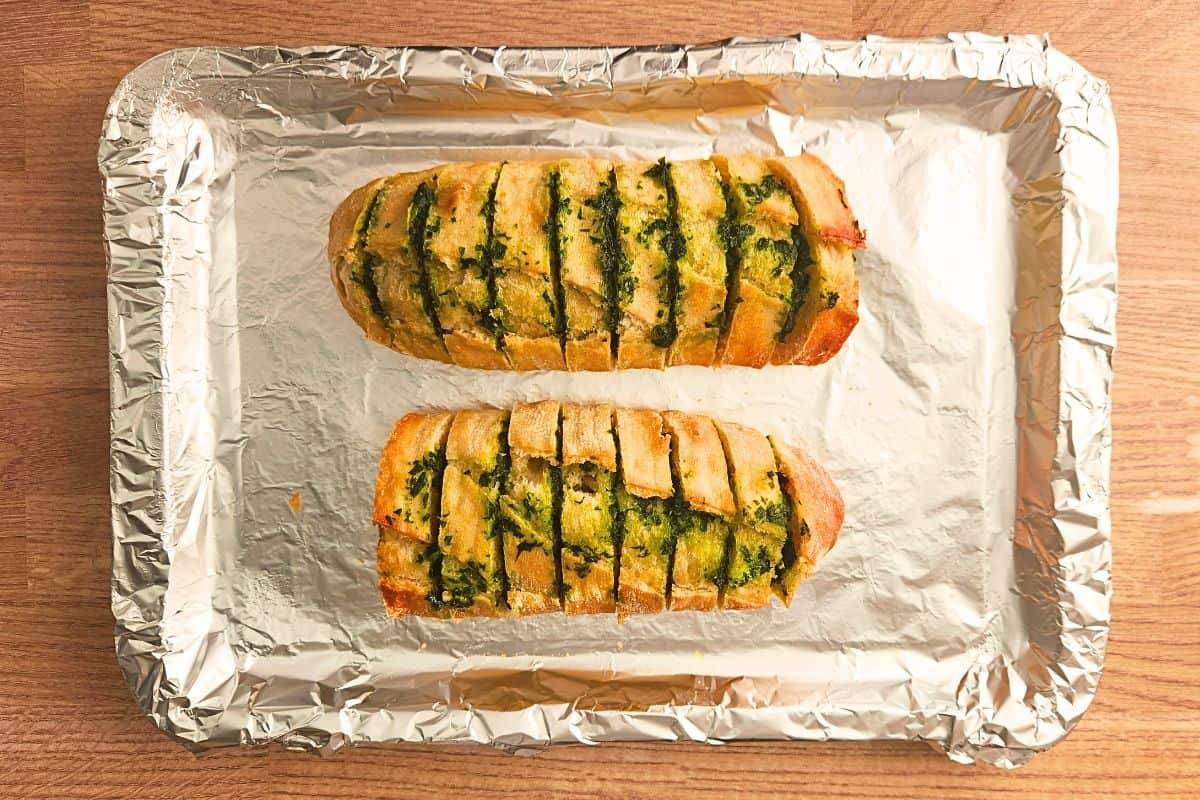
Wild garlic bread
If you’ve already got a batch of wild garlic butter on the go, this wild garlic garlic bread is the obvious next step.
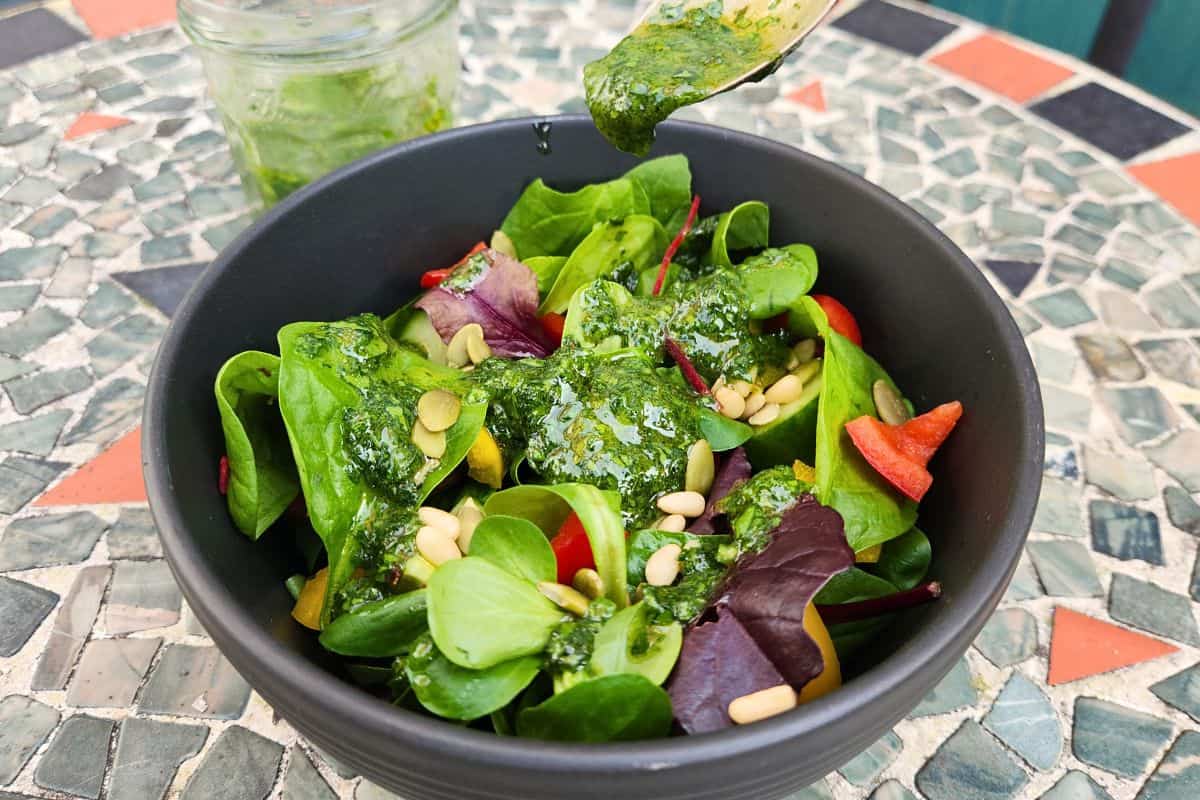
Wild garlic sauce or dressing
Wild garlic sauce is one of the easiest and most versatile ways to make the most of this short seasonal ingredient. Blended with olive oil, vinegar, and a little Dijon mustard, it creates a light dressing or vinaigrette that’s packed with fresh, garlicky flavour.
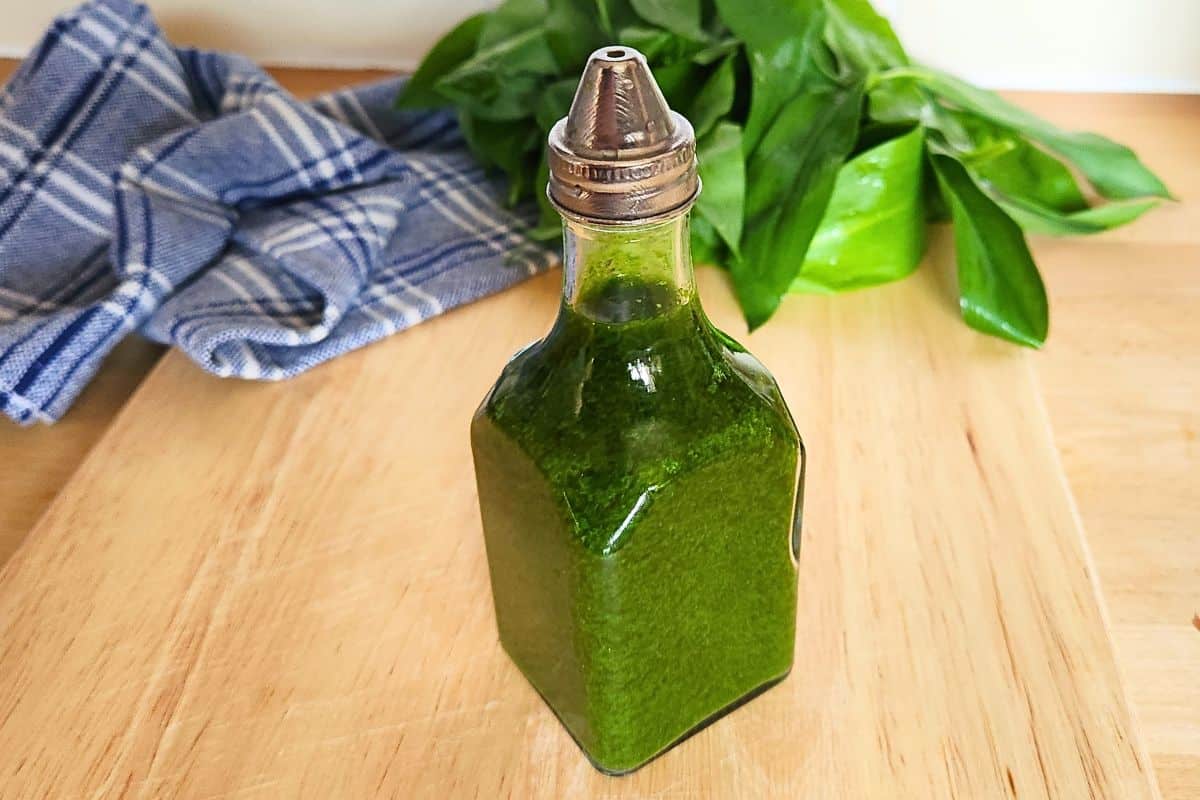
Wild garlic oil
Wild garlic oil is one of the easiest ways to capture that fresh, garlicky flavour while it’s in season. Just blend the leaves with oil and you’ve got something vibrant and ready to drizzle over almost anything.
More wild garlic recipe ideas
- Wild garlic hummus
- Wild garlic risotto
- Wild garlic potatoes
- Wild garlic salad
The list goes on – check out this roundup of 17 recipes with wild garlic!
Foraging tips
Wild garlic is one of the easiest wild foods to gather in the UK, but a few simple tips can help ensure you pick good-quality leaves and forage responsibly.
1. Pick young, healthy leaves
Early in the season, wild garlic leaves are tender, vibrant green, and full of flavour. As the season progresses, the leaves can become tougher and start to lose some of their freshness.
If possible, choose younger leaves without yellowing, holes, or signs of heavy damage from insects. A few small nibbles are perfectly normal in the wild, but it’s best to avoid leaves that look tired or heavily eaten.
2. Avoid busy paths and dog walking areas
When foraging any wild food, it’s sensible to avoid picking plants right beside busy footpaths or areas where dogs are commonly walked.
Instead, look slightly deeper into the woodland where plants are less likely to have been disturbed.
3. Watch out for late-season leaves
Wild garlic in the UK typically grows from March through to May. Once the plants start flowering and the season moves towards early summer, the leaves can become coarser and less flavoursome.
You can still cook with them, but the best flavour usually comes from leaves picked earlier in the season.
4. Take only what you need
Wild garlic often grows in large patches, but it’s still good practice to harvest lightly. Pick a few leaves from different plants rather than stripping one area completely, and avoid damaging the bulbs or roots.
This helps ensure the plants continue to grow and that others can enjoy them too.
With a bit of care, wild garlic foraging can become a simple and rewarding spring ritual – not to mention a great excuse to come home from a walk with the ingredients for your next meal. 🌿
Wild garlic season at a glance
| March | Leaves appear |
| April | Peak season |
| May | Flowers appear |
| June | Leaves declining |
Wild garlic FAQ
Wild garlic typically grows in the UK from March to May. The leaves appear in early spring, while the plant usually flowers later in the season.
Fresh wild garlic is best stored in the fridge. Wrap the leaves loosely in a damp paper towel and place them in a container or bag. Stored this way, wild garlic will usually keep for around 3–7 days. Learn more in my guide to how to preserve wild garlic.
Yes. Wild garlic can be eaten raw and is often used this way in recipes such as pesto, salads, and sauces. The leaves have a mild garlic flavour that’s softer and less sharp than raw garlic cloves.
Yes. Wild garlic should always be washed thoroughly before using, especially if it has been foraged. Rinse the leaves in cold water to remove dirt, grit, and any small insects, then drain and pat dry before chopping or blending.
Yes. Wild garlic flowers are edible and have a mild garlic flavour similar to the leaves. They’re often used as a garnish for salads, soups, or pasta dishes.
Yes. Wild garlic can be frozen to preserve it for later use. The leaves can be chopped and frozen in small portions, or blended into things like wild garlic pesto, which freezes particularly well.
The easiest way to tell wild garlic apart from lily of the valley is by smell. When you crush a wild garlic leaf, it releases a strong garlic scent. Lily of the valley leaves look similar but have no garlic smell and are highly toxic, so never eat a plant unless you are completely sure of its identification.
Thanks for reading
Hopefully you've learned something new about tofu or picked up a few ideas for recipes to try! If you'd like to keep in touch, you can subscribe to join thousands of others who receive my weekly newsletter.
Social follow
🌱 Follow along @thepeskyvegan on Instagram, Pinterest, and Facebook.
Further reading
📩 Fancy keeping in touch? Subscribe to my weekly newsletter.
📖 Find out more about my story.
🍽️ Want to get straight to the food? Hop aboard the recipe train.
🌿 Got a question about veganism? You might find the answer in these vegan FAQs.
Comments
No Comments